
WORLDWIDE SHIPPING

Xeric builds watches that refuse to look ordinary. After wearing three different models over several months—two automatics with unconventional displays and one more wearable three-hand piece—the strengths and the compromises became clear. These are not quiet daily drivers. They are watches you notice every time you look down, and that other people notice too.
If you already own conventional automatics and want something that feels like a design experiment rather than another safe round dial, Xeric is worth examining. If you need instant legibility and refined finishing above everything else, you will probably be happier elsewhere. The rest of this review is based on actual wrist time rather than product photography.
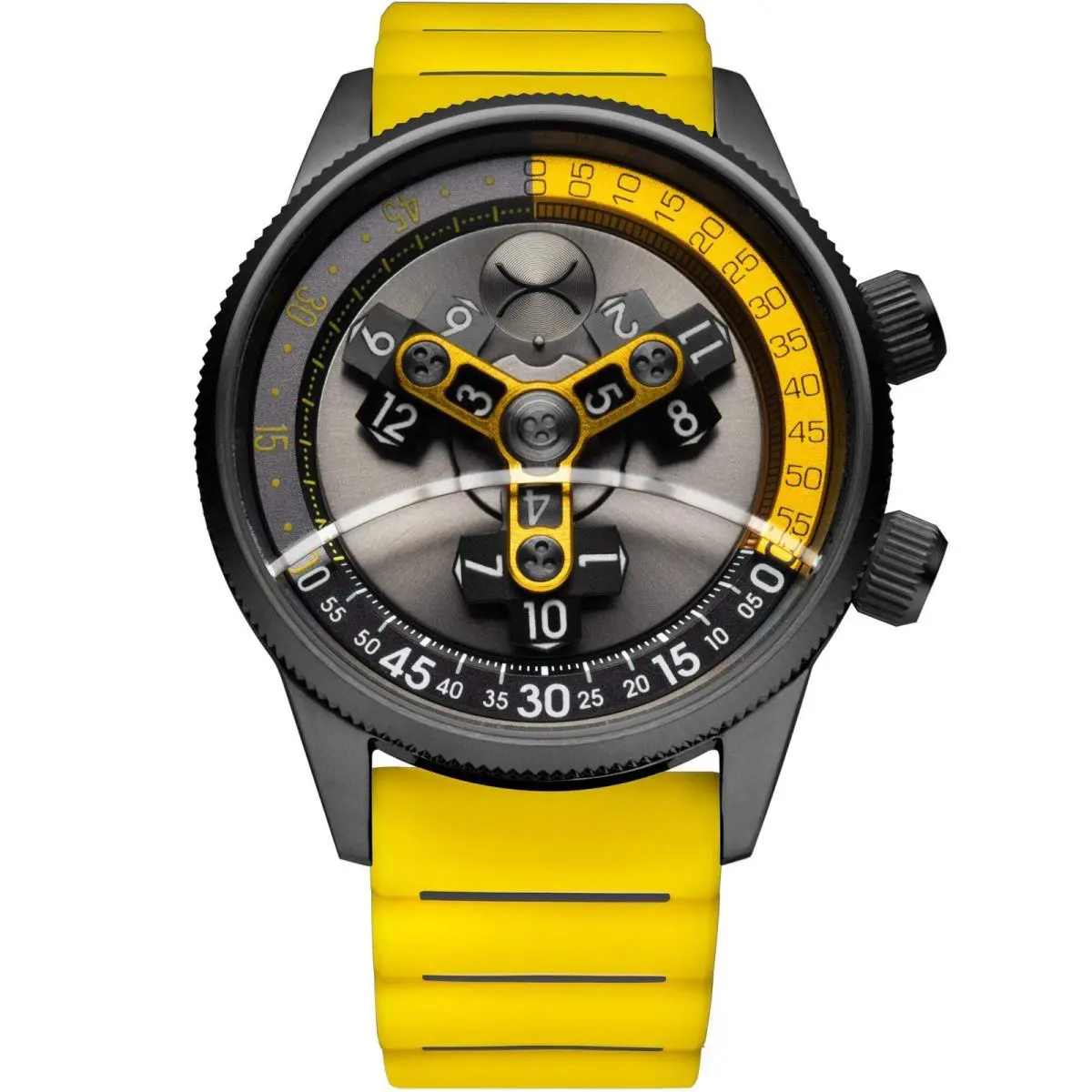
The brand started on Kickstarter and has kept the experimental approach that first attracted enthusiasts. Instead of refining classic tool or dress formulas, Xeric leans into orbital displays, retrograde indications, layered dials, and case shapes that feel closer to industrial design than traditional watchmaking. The goal is a watch that is interesting to look at and to operate, not one that disappears into a sleeve.
That positioning still defines the catalog. Even the more restrained models carry a visible twist. For collectors who already have several conventional automatic watches and want something that breaks the pattern, the approach makes sense.
Creativity is the clearest advantage. Several models use displays that take real time to decode the first few days, then become oddly satisfying once the brain adjusts. The mechanical motion itself is part of the pleasure—watching an orbital hand or a retrograde indicator move is more engaging than checking a standard three-hand layout.
At their best the watches feel like intentional design objects rather than pure gimmicks. They photograph dramatically and hold attention in person. That is the main reason people buy them, and on that criterion they deliver.
The same layouts that look exciting on a desk can be slower to read while walking or driving. After two weeks with one of the more complex orbital models I could tell the time in a couple of seconds in good light, but in low light or when I needed a quick glance the process was still more deliberate than with a conventional dial. That is the core trade-off.
If your priority is glancing at the wrist and knowing the time instantly, Xeric will frustrate you. If you enjoy the small ritual of decoding the display, the friction becomes part of the character.
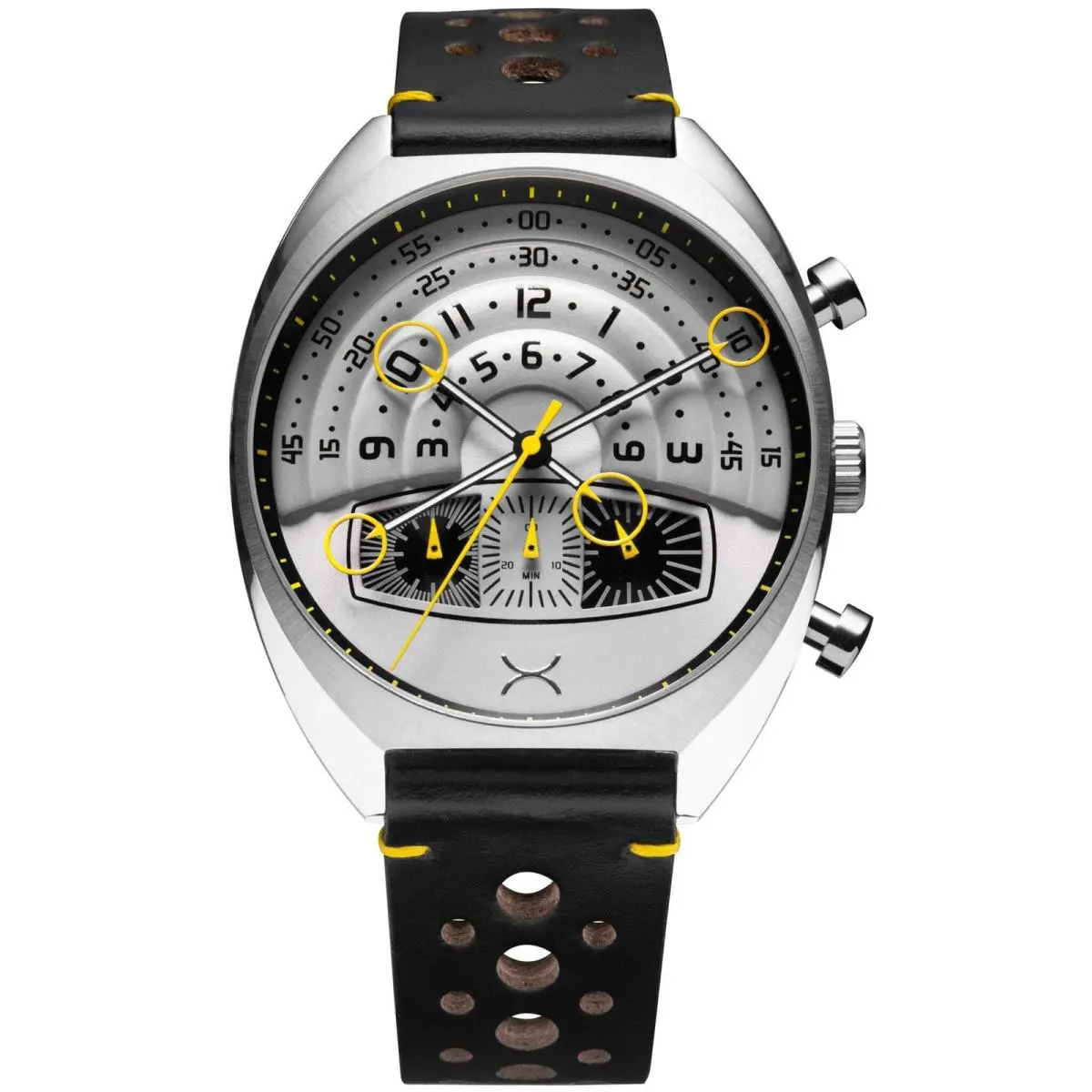
Cases are stainless steel, movements are familiar Japanese automatics, and some models carry sapphire crystals. On first handling the watches feel substantial and visually dense. After several weeks the finishing showed itself to be competent rather than refined—edges and transitions are less crisp than on stronger conventional microbrands at similar prices. The design ambition outruns the polishing in places.
That does not make them poor value. It simply means the money is going into the concept and the display system more than into haute-horlogerie finishing. Buyers who like open-worked or display-driven pieces may also find related interest in skeleton watches.
Most Xeric cases are thicker and more assertive than a standard 40 mm three-hand watch. On my 7-inch wrist the two experimental models I wore felt present but not uncomfortable after a short break-in period. The more conventional model in the lineup was easier for all-day desk wear. Comfort is model-dependent; the boldest designs work better as rotation pieces than as the only watch you own.
Timekeeping on the Japanese movements stayed within normal automatic tolerances. The larger variables were the display quirks rather than accuracy.
Reports from other owners and my own order experience have been mixed. Some shipments arrive promptly with clear communication; others involve longer waits and less precise updates, especially on pre-order or limited runs. International tracking can also be uneven. Once the watch is in hand the ownership experience is mostly about living with the design, but the path to that point is less polished than at larger microbrands.
Serviceability is another realistic consideration. Unusual modules and proprietary display systems can be harder for a local watchmaker to work on than a standard NH35 or Sellita layout. Buy with the expectation that long-term repair options may be limited to the brand or specialized technicians.
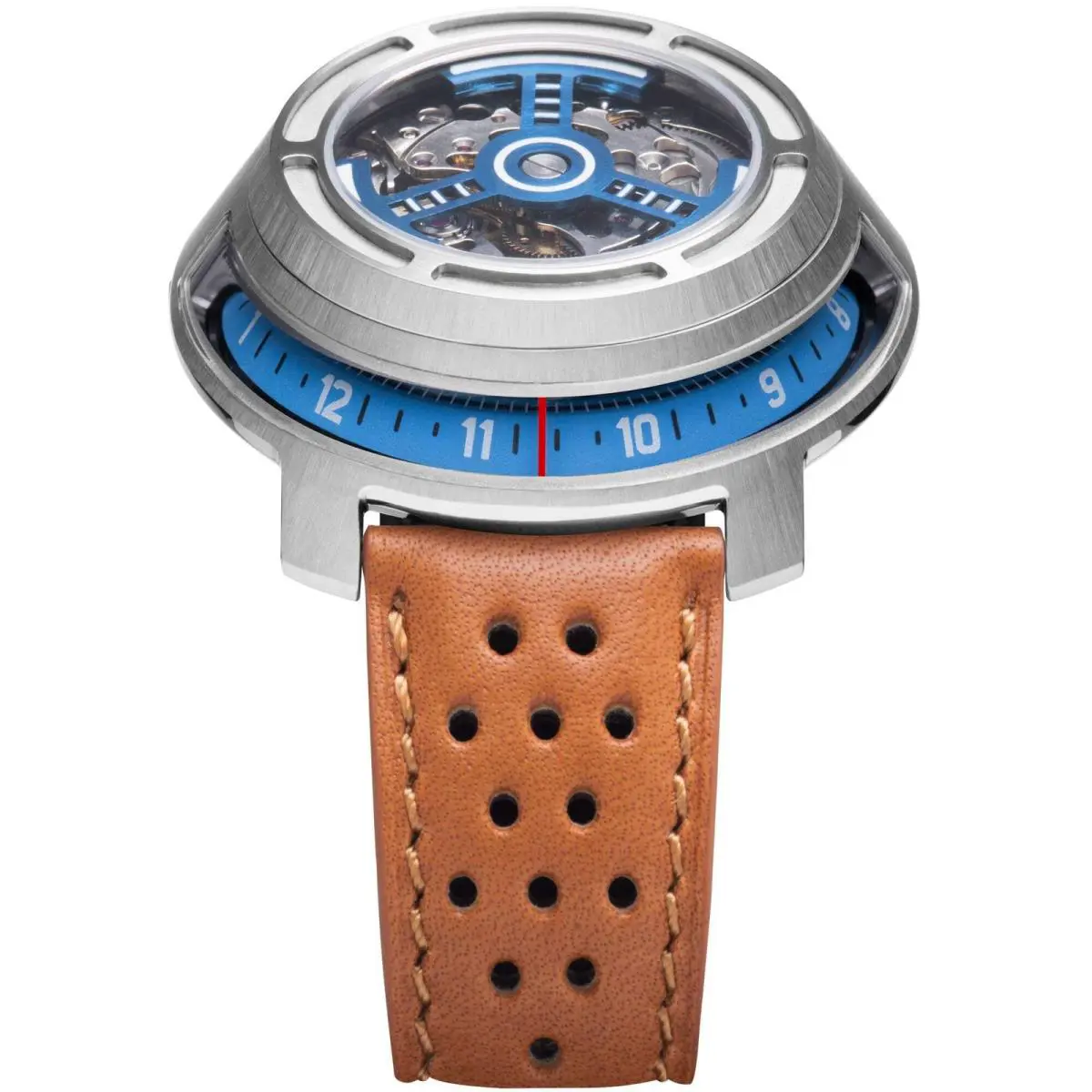
Xeric makes the most sense for collectors who already have reliable daily watches and want something that feels different every time they look at it. The pleasure is in the mechanical theater and the visual identity, not in perfect legibility or refined finishing.
If those priorities are reversed—if you want a watch that tells the time instantly, feels finely finished, and will be easy to service in ten years—there are safer and more rational choices. Xeric is not trying to be that watch.
After living with the pieces, I understand why the brand has a following. The designs are genuinely different, and the better models deliver a small daily moment of interest that most conventional watches never attempt. The compromises in readability, finishing, and sometimes customer experience are real, but they are the price of the originality.
If that trade-off appeals, start with one of the more wearable references rather than the most extreme display. You can always add a more experimental piece later. Browse the current Xeric watches with the expectation that you are buying a design statement first and a conventional timekeeper second.

| OPTION | ||||
| STANDARD | FREE | N/A | 4-9 Business Days | N/A |
| REGISTERED | $9 | $25 | 3-7 Business Days | 5-21 Business Days |
| EXPRESS | $29 | $45 | 2-7 Business Days | 3-9 Business Days |
* DAS and CES may apply.
DAS: There are certain locations in the world where the shipping carriers charge extra fees to deliver packages to these locations. These fees are called DAS (Delivery Area Surcharge) and are usually charged by the carrier in areas that are less accessible for pickups and deliveries.
CES: There are certain cases where the shipping carriers charge extra fees to deliver packages for several reasons, for example: exceeding certain dimensions or weight, perfumes, etc. These fees are called CES (Courier Extra Surcharge).
Handling time: Our handling time is 1-3 business days after the payment has been received.
Import Fees: Any customs or import duties are charged once the parcel reaches its destination country must be paid by the recipient of the parcel. We have no control over these charges and cannot predict what they may be. Customs policies vary widely from country to country. You can contact your local customs office for further information.
For some countries, we calculate Duty VAT, Taxes, etc. following the laws and import regulations of the destination country. These fees are calculated based on destination, item type, and country of origin, manufacture or assembly.