
WORLDWIDE SHIPPING

How can you tell if Nike shoes, clothing or accessories are real or fake? Start with the style number, then compare the design, logo, labels, materials and construction with the same genuine Nike model. No single detail proves authenticity, but several mismatches can reveal a counterfeit.
Picture finding a pair of Nike sneakers at a great price. The photos look good, the Swoosh seems right, and the seller promises they're authentic. Still, something makes you hesitate. Are they the real deal, or a convincing copy?
It's a fair question. Fake Nike products aren't always easy to recognize anymore. Some counterfeit shoes, hoodies and accessories look remarkably close to the originals. They may even come with realistic packaging, convincing labels and genuine-looking product codes.
The good news? There are still ways to spot the differences. You just need to know where to look.
The best way to tell if a Nike product is real or fake is to compare its style number, design, materials, labels and construction with a verified genuine version of the same model. One unusual detail isn't necessarily proof of a fake, but several things that don't match should make you suspicious.
Here's what to check before you buy.
Before examining the logo or stitching, start with something simple: the product code.
Most Nike sneakers, along with many clothing items and accessories, have a style number printed on an internal label or attached tag.
That number helps identify the exact product, and often its particular colorway.
For example, Nike's classic Air Force 1 '07 sneakers have different style numbers depending on the color:
Find the number on your product and search for it on Nike's website or through a reliable product reference.
Does the result match what you're holding? Is it the same shoe, clothing style or accessory? Does the color match?
If the code on a black sneaker belongs to a completely different model, that's a serious red flag.
There's one catch, though. Counterfeiters can copy real Nike style numbers. Finding a matching code is a good start, but it doesn't automatically mean the product is genuine.
Fake Nike clothing is everywhere, from basic T-shirts and hoodies to tracksuits, jerseys and workout clothes.
Some copies are obvious. Others look perfectly normal until you examine them up close.
Here are the details worth checking.
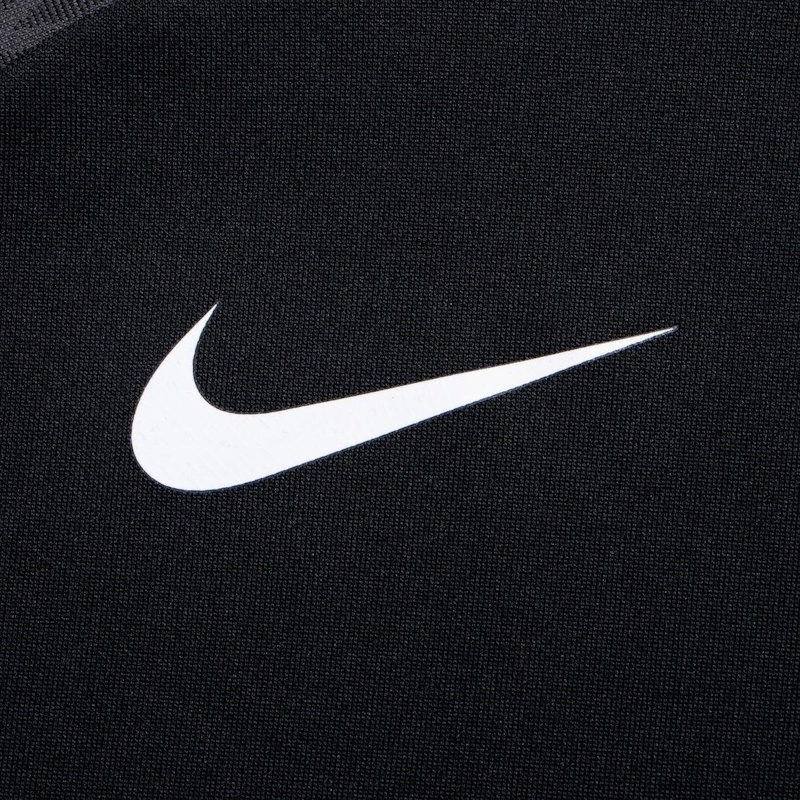
The Nike Swoosh is probably the first thing you'll notice, but don't just check whether it's there.
Look at its shape. Is the curve right? Does the pointed end look natural? Is it positioned where it should be?
On counterfeit clothing, the Swoosh may be too thick, slightly distorted or poorly embroidered. Sometimes the logo is simply placed too high or too low.
If you're examining an embroidered logo, look closely at the thread. Uneven edges, gaps and messy stitching can be warning signs.
One important detail: Nike doesn't use an identical Swoosh on every garment. The size, finish and placement vary between collections.
Compare your shirt or hoodie with photos of that exact style, not just any Nike product.
Sometimes your hands will notice something your eyes missed.
Nike uses different materials for different purposes. A casual cotton T-shirt won't feel like a lightweight Dri-FIT running shirt, and a Tech Fleece hoodie has a different construction from a basic fleece sweatshirt.
Counterfeit clothing may feel unusually thin, stiff, rough or simply different from the genuine version.
Take Dri-FIT clothing, for example. These garments are designed to help move moisture away from the skin. If the fabric looks and feels nothing like the original product, it's worth investigating.
But don't assume all Dri-FIT clothing must be 100% polyester. Nike also makes Dri-FIT garments using fabric blends.
What matters is whether the material matches the specifications for that particular item.
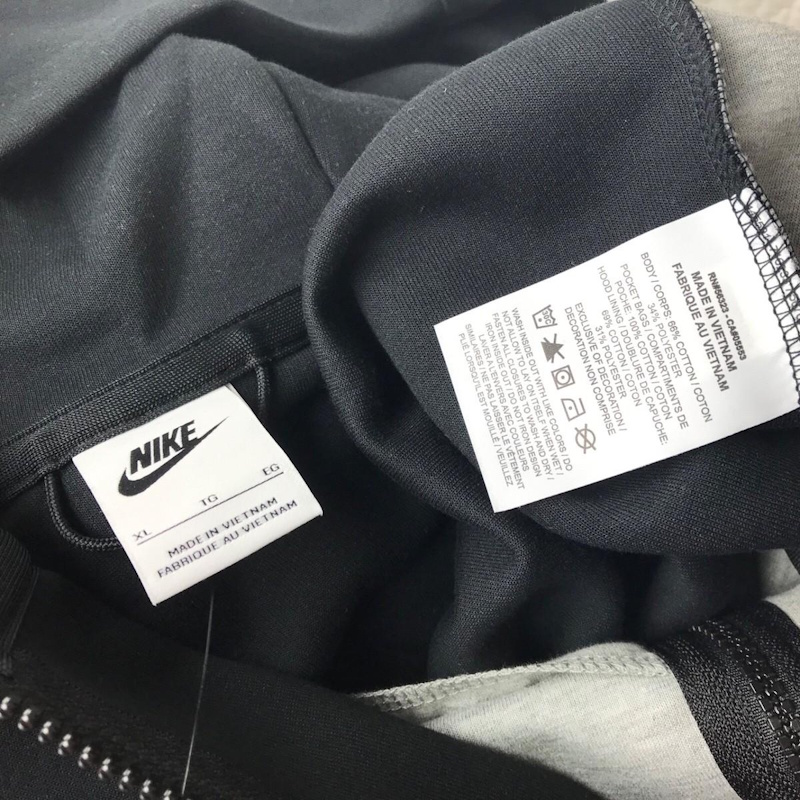
The care label is one of the most useful places to look.
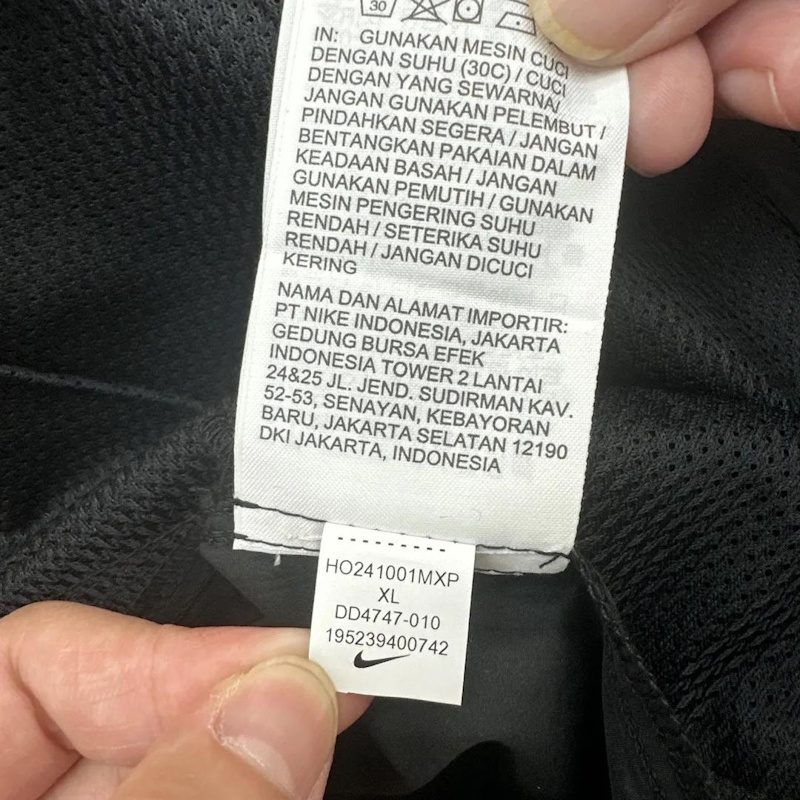
Check the printing, style number, fabric composition and washing instructions.
Watch for misspelled words, blurry text, unusual spacing or material information that doesn't match Nike's product description.
If the label identifies a different product altogether, that's an especially important warning sign.
However, don't reject a garment just because its label looks different from another Nike shirt you own. Nike's labeling can change between product lines, manufacturing periods and markets.
Take a minute to inspect the shoulder seams, sleeves, collar and waistband.
Are the stitches reasonably consistent? Are the seams straight? Does the garment look properly finished?
Fake clothing sometimes has crooked seams, loose threads or poorly attached sections.
Of course, genuine Nike clothing isn't completely immune to manufacturing defects.
One loose thread doesn't prove anything. A badly printed logo, incorrect label and poor stitching on the same garment? That's a much stronger reason to be cautious.
A counterfeit hoodie might look right on a hanger but fit differently when worn.
Maybe the sleeves are too short, the hood is an unusual shape or the pocket sits lower than it should.
Printed graphics can also reveal problems. Look for blurry lettering, inaccurate colors and designs that don't line up with official product photos.
Clothing takeaway: Check the style number first, then compare the Swoosh, fabric, care labels, stitching and overall fit. Don't make your decision based on the logo alone.
Nike sneakers are a particular favorite among counterfeiters. Popular styles such as Air Force 1, Air Max and Nike Dunk are frequently copied.
And while some fake sneakers are easy to identify, better replicas can look convincing in seller photographs.
Here are six things worth examining before you buy.
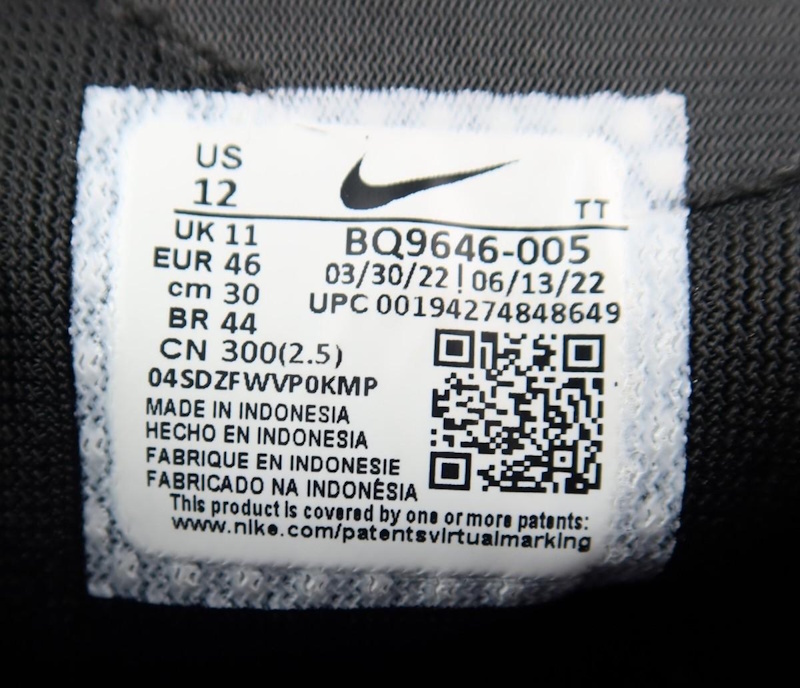
Look inside the shoe, usually around the tongue or inner lining, for the size and product information label.
Find the style number and search for it.
If the shoes come with their original box, compare the information on the box label with the shoe label.
The model, size and colorway should be consistent.
If the style number belongs to a different sneaker, something isn't right.
Keep in mind that legitimate secondhand shoes don't always come with their original packaging. A missing box is not proof of a counterfeit.
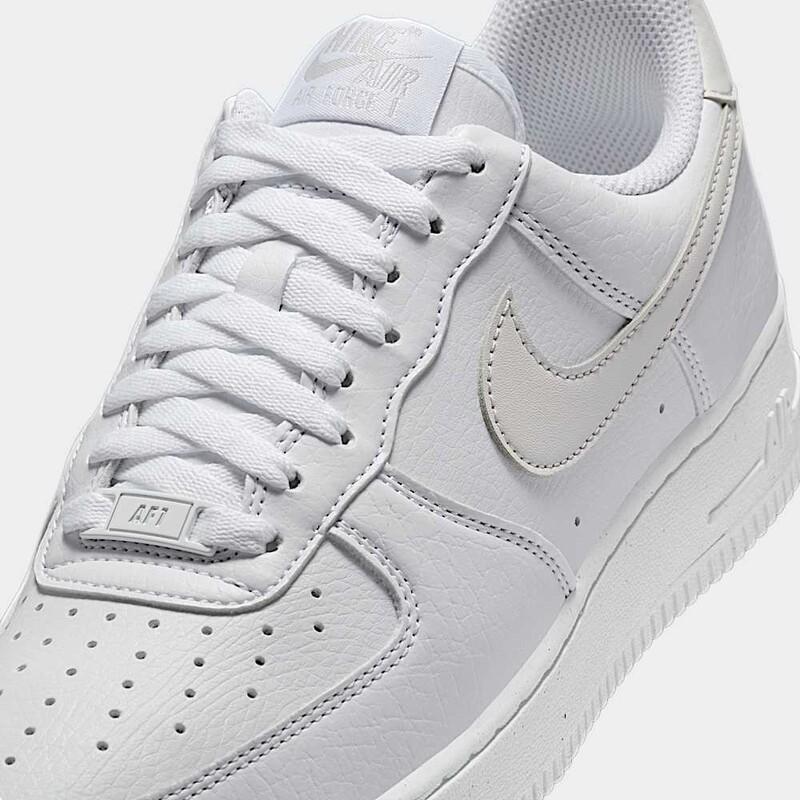
This is one of the most revealing visual checks, especially if you have good reference photos.
Look at the shoe from the side, front and back.
Pay attention to the toe box, heel, tongue and overall proportions.
For example, the Nike Air Force 1 has a recognizable silhouette. A counterfeit version might have an unusually bulky toe box, a different heel shape or an incorrectly proportioned collar.
These aren't always dramatic differences. Sometimes you'll only notice them when comparing two photographs side by side.
Make sure you're comparing the same version of the shoe. Nike often releases updated models and variations with legitimate design differences.
On sneakers, the Swoosh is part of the shoe's overall design, so its position matters.
Check the shape and length of the logo, its angle and how it sits against the surrounding panels.
Then look at the stitching around it.
Are the seams following the same lines as the original shoe? Are the stitches reasonably consistent?
Counterfeit sneakers may have crooked stitching, uneven panel alignment or Swooshes that don't quite match the genuine version.
However, a little visible glue or a loose thread doesn't automatically mean the shoes are fake.
Even authentic mass-produced sneakers can have cosmetic imperfections.
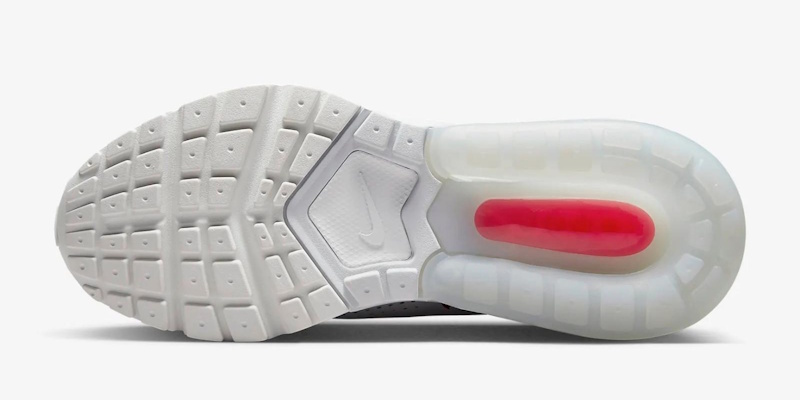
Most people focus on the upper part of a sneaker. The outsole deserves just as much attention.
Turn the shoe over.
Compare the tread pattern, grooves, rubber sections and overall sole construction with verified photos.
Take the Air Force 1 '07, for example. Its familiar outsole features circular pivot patterns inspired by basketball footwear.
A shoe advertised as that exact model but featuring a noticeably different outsole deserves further investigation.
The same principle applies to Air Max and other Nike sneakers. Compare the sole of the specific model, not a different shoe from the same collection.
Leather, suede, mesh, foam and synthetic materials can all provide clues.
A fake sneaker might have leather with the wrong grain, unusually stiff panels or a texture that doesn't resemble the genuine product.
On Nike Air Max shoes, take a close look at the visible Air units.
Do their shape, placement and proportions match the original?
A visibly incorrect cushioning structure can be a significant warning sign.
Don't rely on tricks such as squeezing the sole or weighing the shoe in your hand. Nike uses different materials and cushioning technologies across its collections.
A shoe being unusually heavy or soft doesn't necessarily mean it's counterfeit.
If the original shoebox is included, inspect its label and printing.
Does the style number match the shoes? Is the color description correct? Is the size consistent?
Obvious errors may indicate a problem.
But don't give the box too much credit. Counterfeiters can reproduce packaging, and genuine shoes may sometimes be sold in replacement boxes.
Shoe takeaway: The most useful checks are the style number, silhouette, outsole, materials and Swoosh placement. Compare several details before reaching a conclusion.
It's not only Nike shoes and clothing that get copied. Backpacks, gym bags, caps and other accessories can be counterfeit too.
Fortunately, many of the same basic checks still apply.
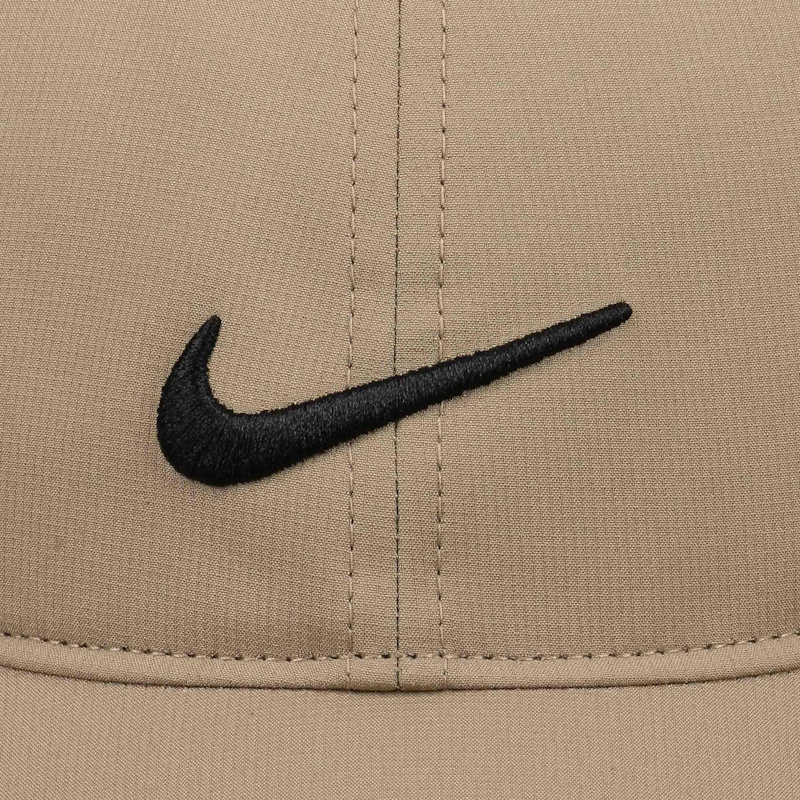
On a Nike baseball cap, pay close attention to the embroidery.
A poorly shaped Swoosh, uneven thread work or distorted lettering can be suspicious.
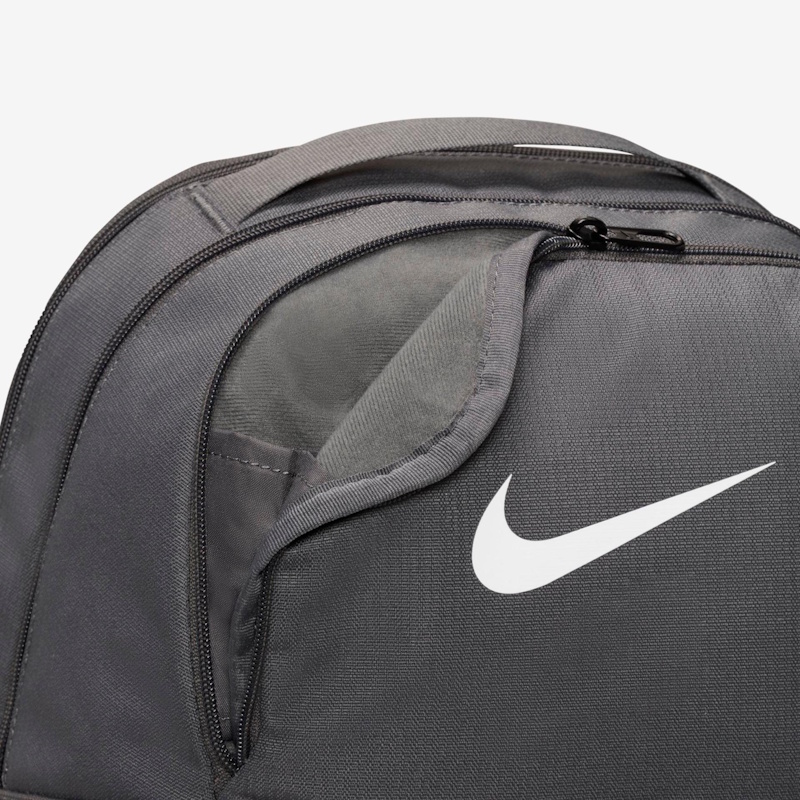
For backpacks and gym bags, compare the logo's size, position and finish with official photos.
Don't forget that Nike has used many different branding styles over the years. The comparison needs to be with the same product.
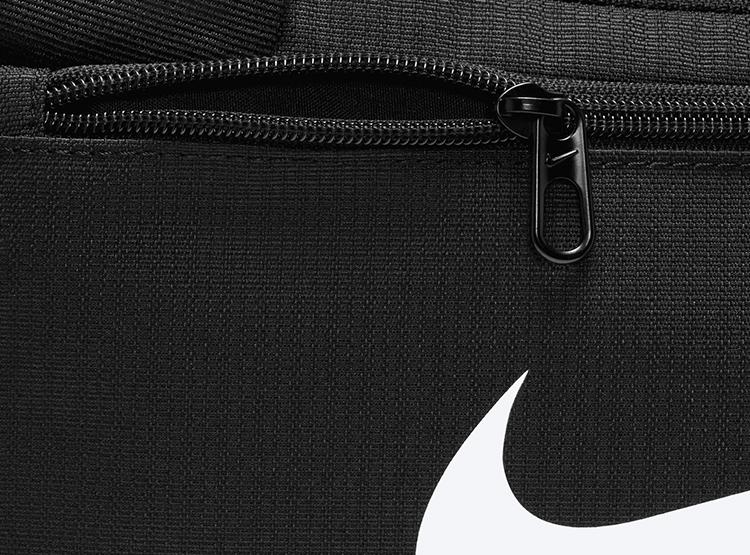
Pick up the bag and examine how it's made.
Do the zippers work smoothly? Are the handles securely attached? Is the material consistent with the original product?
Counterfeit bags may use cheaper-feeling fabric, flimsy hardware or poorly reinforced straps.
However, there's no single zipper brand or marking that proves a Nike bag is authentic.
Focus on the overall construction and whether it matches the genuine item.
This is particularly helpful when checking Nike backpacks.
Look at the number of compartments, zipper positions, side pockets, padding and internal organization.
For instance, if you're buying a Nike Brasilia backpack, compare the exact version's pocket layout and dimensions with the manufacturer's description.
A bag with a completely different compartment arrangement may not be the model the seller claims it is.
Check the product's attached or internal tags for its style number and material information.
If the label identifies an unrelated item or contains obvious printing errors, investigate further.
And remember, a barcode or QR code isn't a certificate of authenticity.
Accessories takeaway: Compare the branding, materials, hardware, compartments and product information with the exact genuine accessory.
Whether you're shopping for Nike sneakers, a hoodie or a backpack, these warning signs are worth remembering.
| Warning sign | Why you should check it |
|---|---|
| Wrong style number | The product code identifies a different model or colorway. |
| Incorrect design | Important details don't match verified genuine photos. |
| Poorly reproduced logo | The shape, stitching or position looks noticeably wrong. |
| Multiple quality problems | Several issues with materials, seams or finishing appear together. |
| Suspicious seller | The seller avoids detailed photos, offers unclear sourcing information or has an unreliable history. |
Price is another factor, but it needs some perspective.
An unusually cheap pair of Nike shoes might be counterfeit. It might also be an authentic discontinued colorway on clearance.
And expensive shoes aren't automatically genuine either.
Use the price as a reason to investigate, not as your final verdict.
There are plenty of supposed Nike authentication tricks circulating online. Some are unreliable.
"Made in Vietnam means they're fake."
Not at all. Nike manufactures genuine footwear and clothing in several countries, including Vietnam, China and Indonesia. The manufacturing country is not an authenticity test.
"If the QR code works, the product is real."
Unfortunately, no. Counterfeiters can copy genuine QR codes, barcodes and style numbers.
"Real Nike shoes never have glue marks."
Genuine Nike sneakers can have minor cosmetic imperfections. Glue marks alone are not enough to determine authenticity.
"No original box means fake shoes."
Not necessarily. Used sneakers, display pairs and some legitimate purchases may come without their original packaging.
Find the style number inside the shoe and compare it with the exact model shown on Nike's official website or a trusted reference. Then examine the shape, stitching, outsole and materials. Multiple matching details give you a better basis for judging authenticity.
Yes. Counterfeiters can copy real style numbers and labels, so a matching product code alone doesn't prove authenticity.
Check the style number, fabric composition, care label, Swoosh placement and stitching. Compare everything with a verified genuine garment from the same collection.
They can be. Nike has genuine products manufactured in China, Vietnam, Indonesia and other countries. Manufacturing location alone doesn't indicate whether an item is real or fake.
Purchasing directly from Nike or an authorized retailer is generally the safest option. When shopping through independent or secondhand sellers, check reviews, return policies and actual photographs of the product.
Before paying, run through these checks:
Here's the thing about fake Nike products: the logo might look perfect, the style number might be correct, and the packaging might seem completely legitimate.
That doesn't necessarily make the product authentic.
Instead of searching for one magical test, examine the whole picture.
Does the style number match? Do the shape, materials and construction look right? Are the labels and design consistent with the genuine model? Is the seller trustworthy?
If everything checks out, that's reassuring. If several important details don't match, it's worth looking into before spending your money.
A few minutes of careful comparison could save you from buying a convincing fake.

| OPTION | ||||
| STANDARD | FREE | N/A | 4-9 Business Days | N/A |
| REGISTERED | $9 | $25 | 3-7 Business Days | 5-21 Business Days |
| EXPRESS | $29 | $45 | 2-7 Business Days | 3-9 Business Days |
* DAS and CES may apply.
DAS: There are certain locations in the world where the shipping carriers charge extra fees to deliver packages to these locations. These fees are called DAS (Delivery Area Surcharge) and are usually charged by the carrier in areas that are less accessible for pickups and deliveries.
CES: There are certain cases where the shipping carriers charge extra fees to deliver packages for several reasons, for example: exceeding certain dimensions or weight, perfumes, etc. These fees are called CES (Courier Extra Surcharge).
Handling time: Our handling time is 1-3 business days after the payment has been received.
Import Fees: Any customs or import duties are charged once the parcel reaches its destination country must be paid by the recipient of the parcel. We have no control over these charges and cannot predict what they may be. Customs policies vary widely from country to country. You can contact your local customs office for further information.
For some countries, we calculate Duty VAT, Taxes, etc. following the laws and import regulations of the destination country. These fees are calculated based on destination, item type, and country of origin, manufacture or assembly.