
WORLDWIDE SHIPPING

Hermès perfume is rarely love at first spray. That is worth saying upfront, because several of the house’s best fragrances can seem almost too quiet when tested quickly in a store. Terre d’Hermès may register as little more than grapefruit and dry wood. Eau des Merveilles can feel oddly salty. Barénia needs time before its patchouli and oakwood begin to make sense.
Give them twenty minutes, though, and the picture changes. Hermès tends to make perfumes that develop slowly rather than perform a full show in the opening. Some people find that understated. Others find it more interesting than another fragrance that smells sweet, powerful, and immediately familiar.
The current range is also broader than it first appears. There are crisp men’s woods, soft summer fragrances, spicy tuberose, rose and oud, and a newer chypre collection that Hermès is still developing. If you are browsing Hermès fragrances in 2026, these are the bottles that deserve attention.
| Fragrance Name | Best Season/Occasion | Key Notes | Target Audience | Price Tier |
|---|---|---|---|---|
| Terre d'Hermès Eau de Toilette | Year-round, office, smart casual | Grapefruit, cedar, flint, vetiver | Masculine | $$$ |
| Terre d'Hermès Eau Givrée | Spring, summer, hot-weather daytime | Citron, juniper berry, Timut pepper, mineral woods | Masculine | $$$ |
| Twilly d'Hermès Eau de Parfum | Day-to-evening, dates, social occasions | Ginger, tuberose, sandalwood | Feminine | $$$ |
| Eau des Merveilles Eau de Toilette | Autumn, winter, understated evening wear | Bitter orange, elemi, benzoin, ambergris-style woods | Feminine | $$$ |
| Un Jardin sur le Nil | Spring, summer, travel, relaxed daytime | Green mango, lotus, sycamore wood | Unisex | $$$ |
| Barénia Eau de Parfum | Autumn, evening, polished everyday wear | Miracle berry, butterfly lily, oakwood, patchouli | Feminine | $$$ |
| Barénia Pleine Fleur | Spring, summer evenings, elegant events | White lily, orange blossom, miracle berry, patchouli | Feminine | $$$ |
| Oud Alezan | Cool weather, formal evenings, collectors | Oud, rose oxide, rose water accord | Unisex | $$$$ |
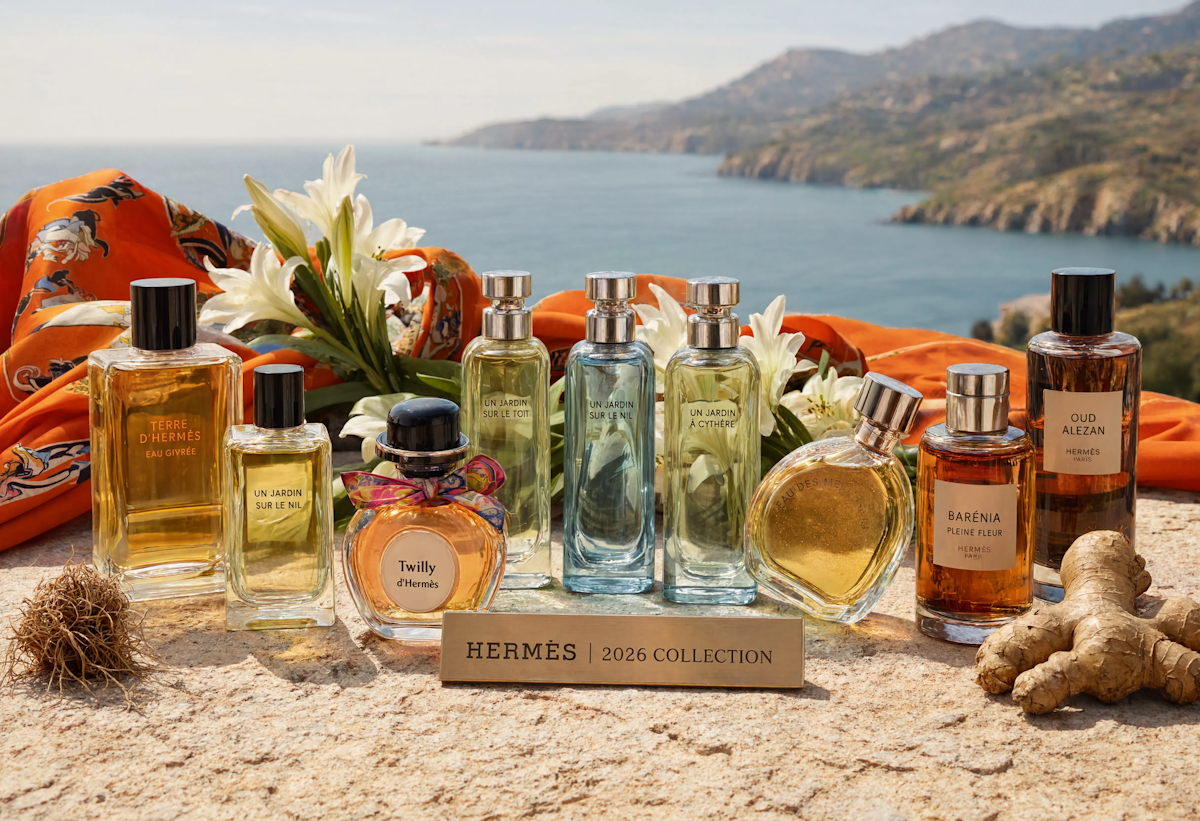
People often describe Hermès fragrance with words such as restraint, transparency, and minimalism. Those phrases can sound like marketing language, but they are useful here. Hermès perfumes usually allow you to pick out the main ingredients. The citrus smells like peel rather than candy. The woods are dry. The flowers tend to keep their shape instead of disappearing into a cloud of vanilla and musk.
Jean-Claude Ellena played a major part in creating that style. He had a habit of making a fragrance feel larger than its note list. Un Jardin sur le Nil is a good example. On paper, green mango, lotus, and wood do not sound especially complicated. On skin they suggest river water, plants, damp air, and pale wood warmed by the sun.
Christine Nagel took over from Ellena and brought a different touch. Her work is still recognizably Hermès, but it often has more body. Twilly feels creamy and spicy. Barénia has a smooth, slightly leathery base. Oud Alezan goes darker than most of Ellena’s Hermès perfumes, yet it never turns into the sort of thick rose-oud fragrance that stays in a room after the wearer has left.
Not every Hermès perfume is minimal. Some are quite layered. What connects them is a sense that someone knew when to stop adding things. In modern perfumery that restraint is rarer than it sounds.
Terre d’Hermès Eau de Toilette has been around since 2006. By fragrance standards that is long enough for it to feel dated. It does not. The bottle may now be familiar, and the basic idea has been copied endlessly, but the fragrance itself still has an edge that many newer men’s releases lack.
The opening is bitter grapefruit rather than juicy orange. Give it a few minutes and the woods begin to show. Cedar and vetiver make Terre dry, while the flint accord gives it that dusty, mineral smell people either understand immediately or struggle to describe. It reminds some wearers of hot stone. Others get pencil shavings, earth, or a trace of smoke.
What matters is that Terre smells recognizable. It is not simply another clean men’s fragrance designed to offend nobody. It has roughness in the right places.
The Eau de Toilette remains the most versatile version in the line. It has more movement than the Parfum and more depth than many summer-oriented flankers. You can wear it to work, at dinner, or with jeans and a T-shirt. It behaves well without smelling boring—a harder balance than it sounds.
Terre d’Hermès Eau Givrée is the version I reach for in serious heat. Its citron opening is bright and quite sharp. Juniper berry and Timut pepper add a cold, almost fizzy sensation before the familiar dry Terre base appears. It is fresher than the original, but it does not smell like someone simply diluted Terre and changed the label.
The Parfum is smoother, warmer, and a little more formal. Some people prefer it because the sharper mineral edge has been rounded off. I miss that edge, although the Parfum does work nicely on colder evenings.
If you are buying one bottle, start with the Eau de Toilette. It is the version that still explains why Terre d’Hermès became a modern classic.
Twilly d’Hermès can be easy to dismiss. The ribbon, the little hat-shaped cap, and the bright presentation make it look as though it was created for a very specific young customer. Smell it properly and that first impression starts to fall apart.
The perfume is built around ginger, tuberose, and sandalwood. The ginger is not the dry spice you might find in a men’s fragrance. It has a sweet, lively quality that sometimes feels almost candied. The tuberose comes through soon afterward, creamy but not huge. Then the sandalwood softens the whole thing.
There is sweetness here, but Twilly never becomes a standard sweet floral. The ginger keeps poking through. One moment it feels creamy, the next slightly peppery. That changeability is what makes it enjoyable.
Twilly also wears more easily than many tuberose perfumes. Some white florals announce themselves before you enter the room. Twilly is friendlier. It has enough presence for dinner or a date, but it rarely feels too much during the day.
Women who find 24 Faubourg too formal may prefer Twilly. It is younger in mood, but not juvenile. It also has a little more personality than the many clean, musky perfumes currently aimed at shoppers who want something safe.
I would not recommend Twilly to someone looking for a dark or dramatic evening scent. That is not what it does. It is at its best when you want something cheerful, slightly unusual, and easy to live with.
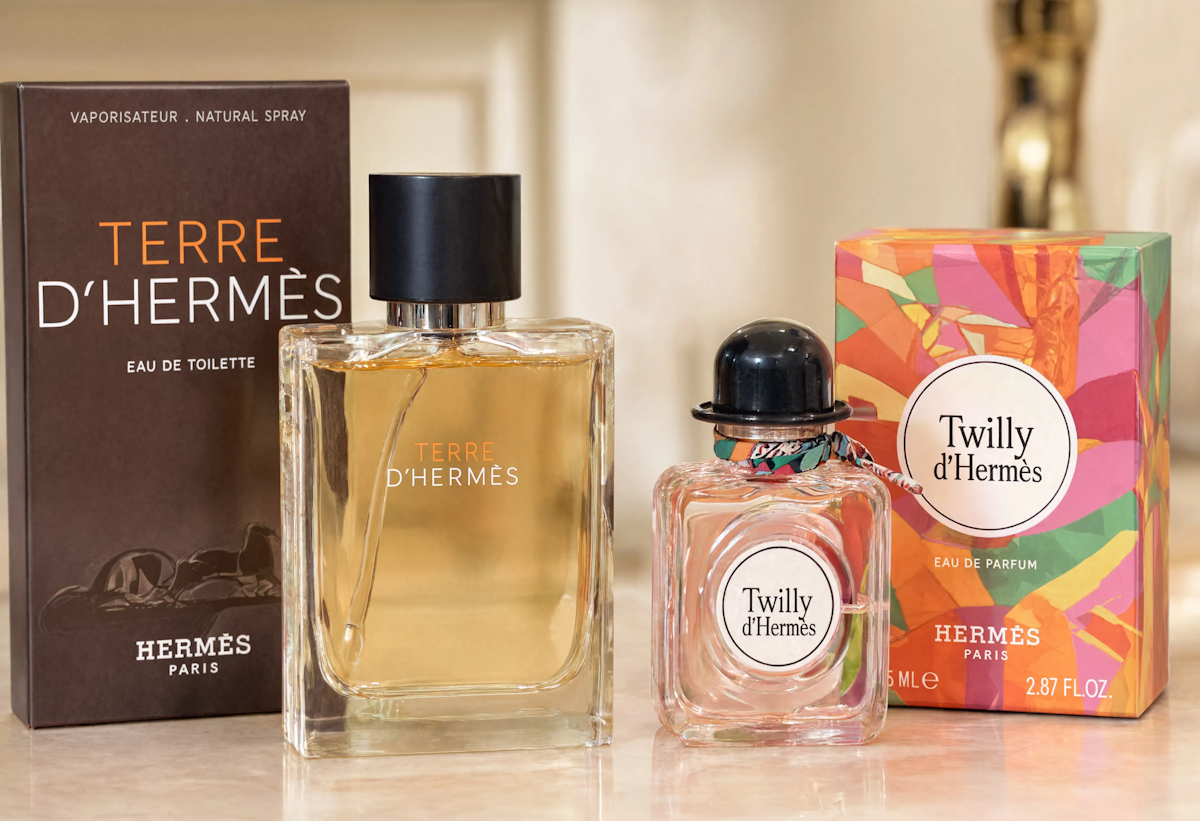
Eau des Merveilles is one of those fragrances that makes more sense once you stop asking it to behave like a conventional women’s perfume. There is no big rose, jasmine, or tuberose moment. Instead it moves from bitter orange into resin, warm woods, and a salty ambergris-style effect.
The first spray has a bright flash of orange—not orange juice, more like the smell released when you bend a piece of bitter orange peel. Elemi and benzoin arrive later, and the fragrance becomes warmer without turning sweet in the usual way.
The drydown is the best part. It has the smoothness of polished wood, a little resinous warmth, and something faintly salty underneath. I have heard it described as a wooden box near the sea, which is not a bad description even if it sounds stranger than the fragrance actually smells.
Eau des Merveilles suits women who are tired of sweet florals and heavy vanilla. It also works surprisingly well on men. The orange and woods do not feel especially feminine, and the perfume never relies on powder or sugary musk to make its point.
L’Ambre des Merveilles is richer and more obviously warm. It has more amber and patchouli and can be a better choice in winter. Still, the original Eau de Toilette has more personality. It feels less finished in a good way, as though a few rough, salty edges were deliberately left in.
Most fresh summer perfumes are easy to understand. You get lemon, watery notes, and clean musk. They smell pleasant in hot weather and then disappear from memory.
The Jardin collection is different because each fragrance contains at least one note that does not behave as expected. That small odd detail is usually what makes the perfume worth wearing.
Un Jardin sur le Nil has green mango, but it does not smell like a tropical fruit drink. The mango is tart, green, and almost vegetable-like. Lotus adds a watery effect, while sycamore wood gives the fragrance a dry base. It smells cool without becoming a typical blue aquatic scent.
This is the Jardin fragrance I recommend most often. It works on men and women, handles warm weather well, and feels clean without smelling like soap. It is especially good for travel because it rarely feels out of place.
Un Jardin sur la Lagune is softer. Magnolia and pittosporum create a creamy floral effect, with salt and wood in the background. It feels hazier and more romantic than Un Jardin sur le Nil. There is something slightly faded about it, almost like the smell of flowers carried through damp coastal air.
Un Jardin à Cythère is warmer and drier. The combination of grass, olive wood, and pistachio can sound gourmand, but it does not smell like dessert. The pistachio is nutty rather than sugary. The result feels sun-baked and Mediterranean.
These perfumes are not known for enormous projection. That does not bother me. Heavy projection can become exhausting in summer, especially when heat makes every sweet note feel larger. The Jardin scents sit closer and invite respraying. For this type of fragrance that feels appropriate.
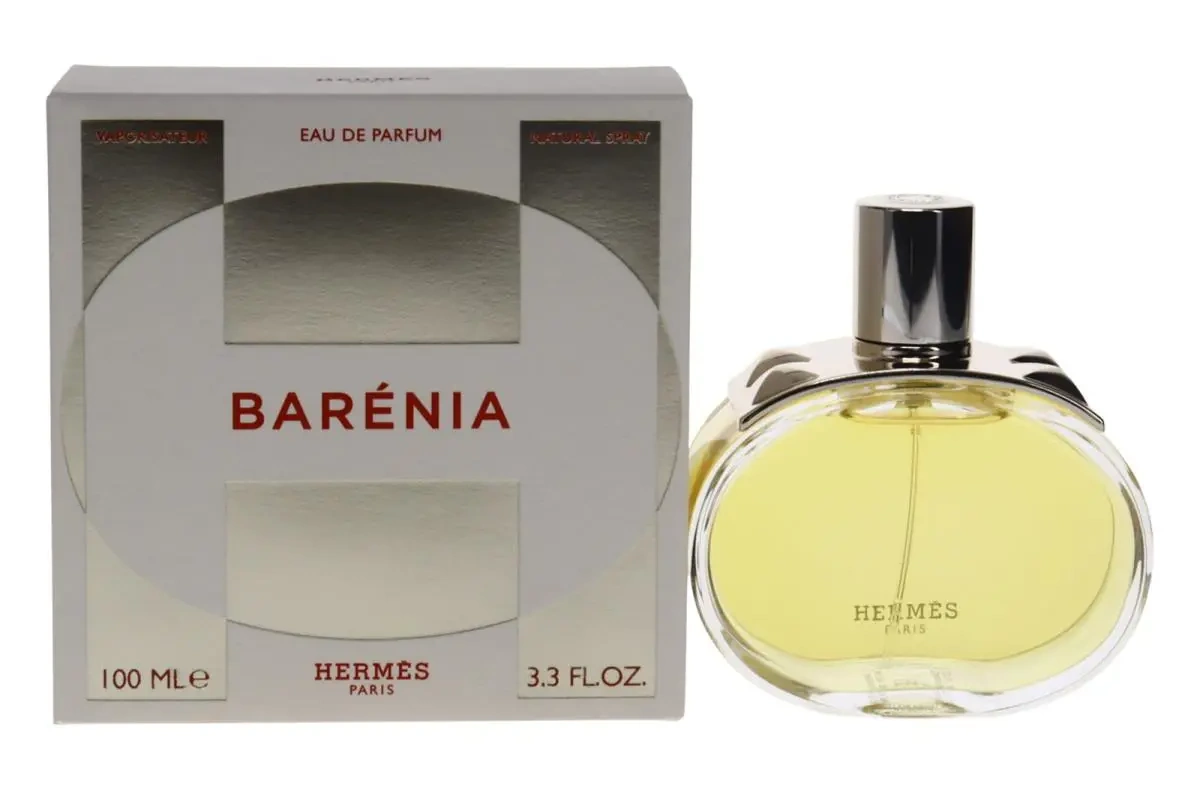
Barénia Eau de Parfum arrived in 2024 with a fairly bold claim. Hermès presented it as the house’s first chypre perfume. That description created certain expectations, especially among people who associate chypres with oakmoss, patchouli, and the darker fragrances of the twentieth century.
Barénia does not smell vintage. It is smooth, clean, and very modern. Miracle berry brings a tart sweetness that is difficult to compare with ordinary red fruit. Butterfly lily adds a soft floral effect. Oakwood and patchouli sit underneath and become more noticeable as the fragrance warms on skin.
My first reaction to Barénia was that it seemed almost too polite. It took a proper wear before I understood what it was doing. The fragrance does not have one dramatic moment. Instead the berry, lily, and patchouli keep changing position. At times it feels fruity. Later it becomes woody and slightly leathery.
It is feminine, though not in an obvious rose-and-vanilla way. Barénia should appeal to women who want something polished but do not want to smell overtly sweet or floral.
Barénia Eau de Parfum Intense followed in 2025. This version makes the base darker and more noticeable. The oakwood and patchouli are stronger, and the leather effect is easier to pick up. Intense also lasts better on many people, making it the more convincing option for evening wear.
Then came Barénia Pleine Fleur in 2026. White lily and orange blossom move to the front, giving the line a brighter and more floral direction. Miracle berry and patchouli are still present, so it does not feel disconnected from the original Barénia.
Pleine Fleur is not simply Barénia with a handful of extra flowers added. It feels softer and more open. The orange blossom brings brightness, while the lily creates a creamy floral center. Patchouli stops it from becoming overly pretty.
Choosing between them is fairly straightforward. The original Barénia is the most balanced. Intense is darker and stronger. Pleine Fleur is the best option for someone who wanted more flowers in the first version. Anyone looking through the latest Hermès perfume collection should try all three on skin, because the differences become much clearer after the opening.
Rose and oud has become one of the most overused combinations in luxury perfumery. It can be beautiful, but many versions follow the same recipe: a sweet rose, dark synthetic oud, plenty of amber, and enough projection to fill a lift.
Oud Alezan, from the Hermessence collection, handles the pairing differently. The oud is dark, but the fragrance has space. The rose appears in two forms. One side smells bright and slightly metallic. The other is softer, almost watery.
That contrast keeps Oud Alezan from becoming thick. You still get the depth expected from oud, and it lasts longer than most of the lighter Hermès range, but it remains controlled. The rose does not turn jammy. The wood does not become aggressively smoky.
This is probably not the right perfume for someone who wants the loudest possible rose-oud scent. There are plenty of other options for that. Oud Alezan is for a wearer who likes the materials but wants them arranged with more restraint.
It is completely unisex and much better in cool weather than in summer heat. The price is high, so buying without testing would be risky. Oud can become sharp or medicinal on certain skin types. When Oud Alezan works, though, it has an elegant darkness that is difficult to find elsewhere.
There is no single answer, but a few choices are easier than others.
If you want a men’s fragrance for regular use, buy Terre d’Hermès Eau de Toilette. It remains the most complete option in the range. Choose Eau Givrée instead when you mainly need something for hot weather.
For women, Twilly d’Hermès is the easier everyday recommendation. It has sweetness and flowers, but the ginger keeps it interesting. Barénia feels more grown-up and restrained, while Barénia Intense is better at night.
Eau des Merveilles is the choice for someone who does not want an obvious floral perfume. Its bitter orange, resins, and woods feel warm without becoming heavy.
For summer, I would pick Un Jardin sur le Nil. It is fresh, unisex, and unusual enough to avoid smelling like every other warm-weather fragrance.
Barénia Pleine Fleur deserves attention as the newest floral release, especially from anyone who found the original Barénia too dry. Oud Alezan is the collector’s choice and the most expensive recommendation here.
Whatever you choose, do not decide from the first spray alone. Hermès fragrances often seem simple for the first few minutes. Their better details appear later, once the obvious citrus or floral notes have calmed down. Spray on skin, go for a walk, and smell it again after an hour. That is usually when the real decision becomes easier.
Twilly d’Hermès is one of the best-known modern Hermès perfumes for women. Its mix of ginger, tuberose, and sandalwood is easy to recognize and works for both daytime and casual evenings. Barénia is a newer alternative for women who prefer patchouli, woods, and a less obviously sweet style. For a more traditional Hermès floral, 24 Faubourg remains an important classic.
Yes. Terre d’Hermès still stands apart from many modern woody fragrances because it combines bitter grapefruit, cedar, vetiver, and a dry flint effect. The Eau de Toilette is still the most versatile version. Eau Givrée is better in very hot weather, while Terre d’Hermès Parfum is smoother and warmer.
Oud Alezan is one of the longer-lasting perfumes in the Hermès range, particularly compared with the lighter Jardin fragrances. Barénia Eau de Parfum Intense and Terre d’Hermès Parfum are also good options for stronger performance. Results will vary depending on skin, weather, clothing, and the amount applied.

| OPTION | ||||
| STANDARD | FREE | N/A | 4-9 Business Days | N/A |
| REGISTERED | $9 | $25 | 3-7 Business Days | 5-21 Business Days |
| EXPRESS | $29 | $45 | 2-7 Business Days | 3-9 Business Days |
* DAS and CES may apply.
DAS: There are certain locations in the world where the shipping carriers charge extra fees to deliver packages to these locations. These fees are called DAS (Delivery Area Surcharge) and are usually charged by the carrier in areas that are less accessible for pickups and deliveries.
CES: There are certain cases where the shipping carriers charge extra fees to deliver packages for several reasons, for example: exceeding certain dimensions or weight, perfumes, etc. These fees are called CES (Courier Extra Surcharge).
Handling time: Our handling time is 1-3 business days after the payment has been received.
Import Fees: Any customs or import duties are charged once the parcel reaches its destination country must be paid by the recipient of the parcel. We have no control over these charges and cannot predict what they may be. Customs policies vary widely from country to country. You can contact your local customs office for further information.
For some countries, we calculate Duty VAT, Taxes, etc. following the laws and import regulations of the destination country. These fees are calculated based on destination, item type, and country of origin, manufacture or assembly.