Choosing fishing sunglasses by looking at product photos is a little like choosing a reel by color. The pictures may get your attention, but fit and performance are what matter after several hours on the water. That is especially true when comparing the Costa Fantail, Blackfin and Rinconcito. All three are popular Costa Del Mar sunglasses, but they sit differently on the face and are designed for slightly different anglers.
I have worn enough fishing sunglasses to know that a frame can have an excellent lens and still be the wrong choice. If the temples pinch, the frame slides when your face gets wet or sunlight leaks in around the sides, you will notice it long before the first fish reaches the boat.
The Costa Fantail is the compact, high-wrap option. The Blackfin is the roomier workhorse. The Rinconcito has a more relaxed shape that moves easily between fishing, driving and everyday use. This guide compares their dimensions, coverage, comfort and practical fishing performance so you can choose based on your face rather than simply buying the model with the best-looking mirror lens.

| Model | General size | Frame width | Lens curve | Best suited to |
|---|---|---|---|---|
| Costa Fantail | Medium | Approximately 131 mm | Base 8 high wrap | Small to medium faces, active fishing and reduced side glare |
| Costa Blackfin | Large | Approximately 135 mm | Base 8 high wrap | Medium to large faces and maximum fishing coverage |
| Costa Rinconcito | Medium | Approximately 130 mm | Base 6 medium wrap | Average faces, everyday comfort and mixed fishing use |
The measurements are useful, but they do not tell the entire story. Fantail and Rinconcito are close in total width, yet they feel very different. The Fantail curves more aggressively around the face, while the Rinconcito sits flatter and has longer temple arms. Blackfin is wider and has larger lenses, giving it a more substantial fishing-frame feel.
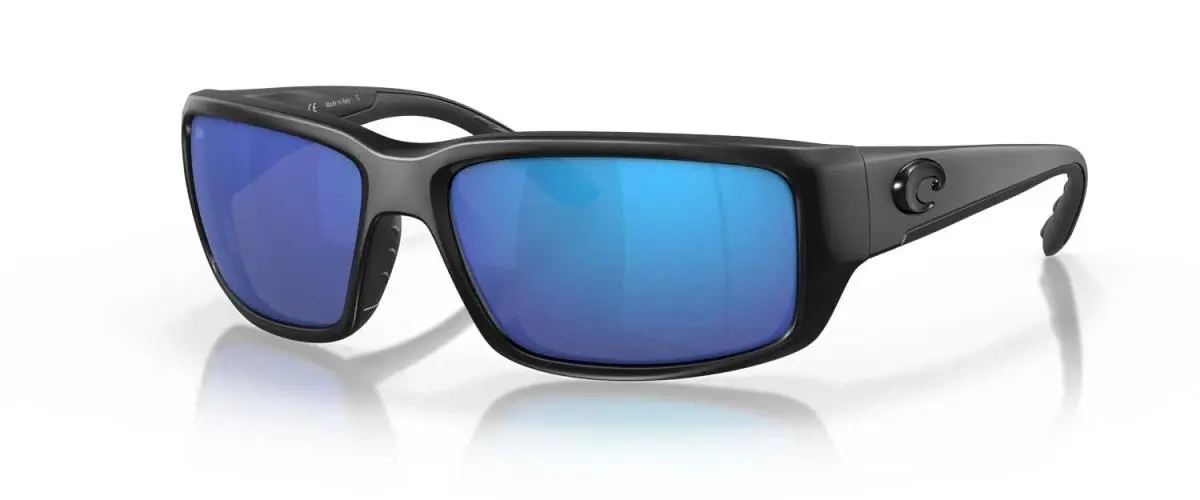
The Costa Fantail is often described as the smaller relative of the Blackfin, and that is an accurate way to think about it. It gives you the secure, wrapped-in feeling of a dedicated fishing frame without taking over a smaller face.
The standard Fantail measures approximately 131 mm across, with 59.2 mm lenses, a 14 mm bridge and 127 mm temple arms. Its Base 8 curve brings the lenses around the sides of the face, helping limit glare that can sneak in near the temples.
Fantail is my first recommendation among these three for anglers with small to medium faces. It can also work well for someone with an average-width face who likes a close, secure fit. The frame should feel planted rather than oversized, which is useful when you are leaning over the gunwale, moving between casting positions or dealing with a fast boat ride.
On a broad face, however, Fantail may feel tight at the temples. The strong wrap can exaggerate that pressure. A frame that looks correct from the front can still become uncomfortable after several hours, so people who regularly struggle with narrow sunglasses should look more seriously at Blackfin.
The biggest advantage is the combination of compact dimensions and maximum-style coverage. Smaller fishing frames sometimes leave too much open space near the sides, but Fantail maintains a performance shape. It is a strong choice for kayaking, flats fishing, shore casting and any situation where you want your sunglasses to remain stable while you move.
Fantail is also available in a broad mix of lens and frame combinations. Depending on the exact version, shoppers may find both Costa 580G glass and 580P polycarbonate options, along with blue, green, gray and silver mirror lenses.

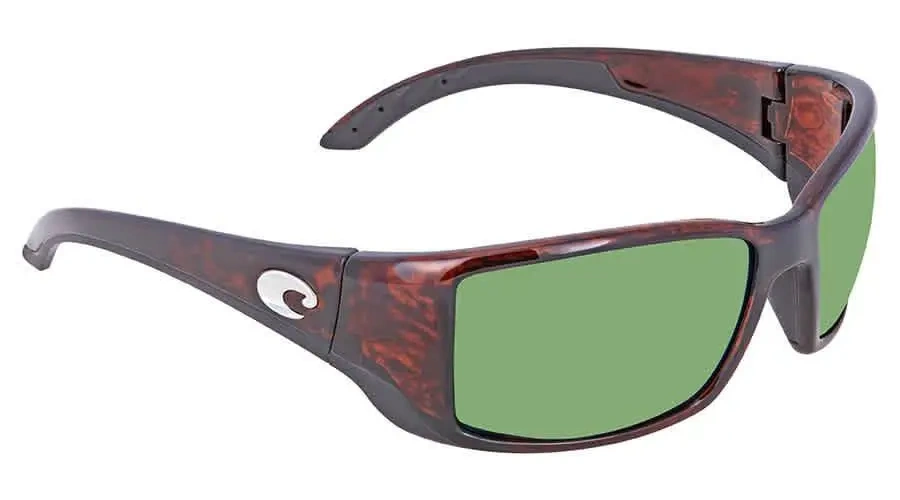
The Costa Blackfin is the most traditional dedicated fishing frame in this comparison. It has a larger lens front, a wide bridge and the same high-wrap Base 8 style that helps block reflected light from the sides.
Blackfin measures approximately 135 mm across, with 61.8 mm lenses, a 17 mm bridge and 120 mm temple arms. Although Costa classifies the frame as a regular fit, its overall dimensions make it the roomiest of the three models.
Blackfin is usually the safest option for medium to large faces. If ordinary sunglasses often look undersized on you, or you feel pressure near the hinges, the extra width can make a noticeable difference. Its larger lens area also provides a broad field of coverage when you are scanning open water.
I especially like this type of fit for boat fishing, where the combination of direct sunlight, surface reflection and wind can punish a weak frame. The Blackfin feels like equipment rather than a fashion accessory. That does not mean it is uncomfortable, but its priority is clearly protection and stability.
On a narrow face, Blackfin can sit too wide, slide down the nose or leave gaps that undermine the benefit of the wrapped design. A large lens is not automatically better if the frame does not follow your face correctly. Smaller anglers who want the same performance character will normally get a more secure result from the Fantail.
There are also Blackfin Pro versions with extra angler-focused features. However, the standard Blackfin remains a strong choice for someone who wants a proven shape without necessarily paying for every upgraded detail.
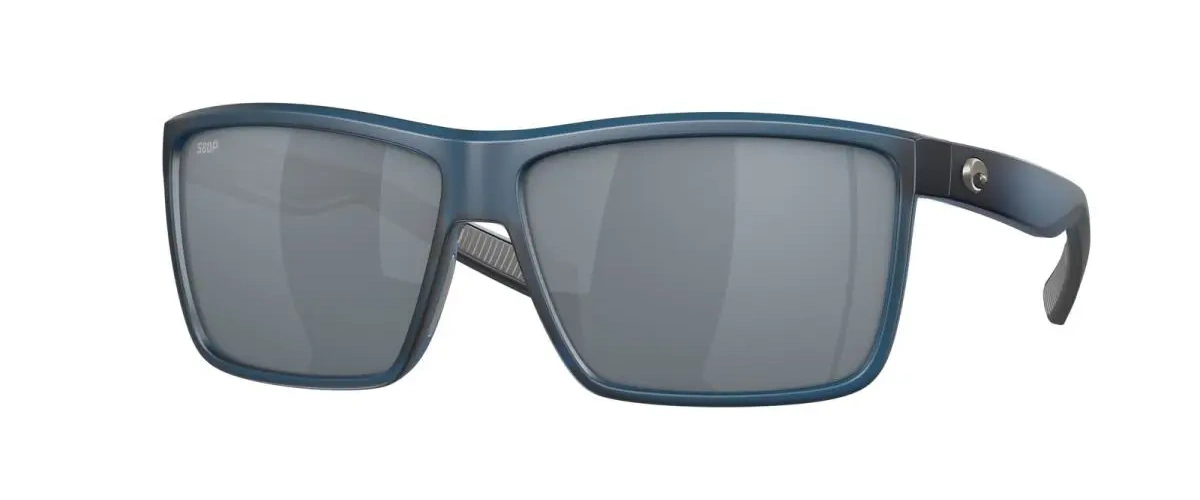
The Costa Rinconcito takes a different approach. Instead of wrapping tightly around the face like the Fantail and Blackfin, it uses a Base 6 curve that provides medium coverage. The result feels more like a crossover between fishing eyewear and an everyday rectangular sunglass.
Rinconcito measures approximately 130 mm across, with 60 mm lenses, a 12 mm bridge and long 140 mm temple arms. It also features integral spring hinges and Hydrolite material at the nose and temples, helping the frame remain comfortable and secure.
Rinconcito is well suited to average-width faces and anglers who dislike the compressed feeling of a heavy wrap. Its spring hinges provide some flexibility, while the longer temples give it a more familiar everyday fit.
This would be my choice for someone who fishes regularly but also wants to use the same sunglasses for driving, walking around town or sitting outside after the boat is back at the dock. It looks less technical than the other two models, which can make it more versatile.
The Base 6 design does not seal the sides as aggressively as Fantail or Blackfin. During harsh offshore sun, some anglers may notice more peripheral light. For casual fishing or mixed use, that may not be a problem. For long offshore days, a Base 8 frame usually provides the more protective experience.

For pure coverage, Blackfin wins. Its wider front, larger lenses and strong wrap make it the best option for a larger angler who spends full days around reflective water.
Fantail comes extremely close in functional coverage but packages it in a smaller frame. For small to medium faces, Fantail may actually provide better real-world protection because it is less likely to leave gaps or slide around.
Rinconcito provides enough coverage for fishing, but its appeal is balance rather than maximum enclosure. It is the most comfortable transition from water to everyday use.
Frame fit should come first, but lens material is the next important decision. Many versions of these models are available with Costa 580G glass or 580P polycarbonate lenses. You can also browse the complete selection of Costa sunglasses if you want to compare additional frame shapes.
Glass is my preference when spotting fish, reading subtle changes in water color or spending long hours looking across glare. Costa 580G lenses provide excellent optical clarity and strong scratch resistance. The trade-off is additional weight and less impact resistance than polycarbonate.
Polycarbonate lenses are lighter and more impact resistant. They make sense for kayaking, fast boat runs, active casting or anglers who are sensitive to the weight of glass. They may also feel more comfortable when worn from early morning until late afternoon.
Lens color should match your usual conditions. Blue mirror is a popular choice for harsh sun and open water. Green mirror is often favored for bright inshore conditions, while gray and silver mirror options offer a more neutral view for general use.
You have a small to medium face, want strong side coverage and prefer a frame that stays close during active fishing. It is the most compact performance option in this comparison.
You have a medium to large face, want the broadest coverage and spend long days fishing in strong sun. It is the most substantial and fishing-focused choice.
You want a medium frame that feels comfortable beyond the boat. It is the strongest choice for mixed fishing, driving and everyday use, especially if you do not enjoy an aggressive wrap.
Yes. Fantail is a medium frame measuring approximately 131 mm wide, while Blackfin is a larger frame measuring approximately 135 mm wide. Fantail is generally better for smaller faces, while Blackfin provides more room across the temples and bridge.
Blackfin provides the largest overall coverage. Fantail offers a similarly strong wrap in a smaller package. Both use a Base 8 curve that helps reduce light entering around the sides.
Yes. Rinconcito has polarized lens options, secure Hydrolite contact points and a comfortable medium fit. It is particularly good for anglers who want one pair of sunglasses for fishing and everyday activities.
Fantail is normally the best starting point for a narrow or smaller face. Its compact dimensions and high-wrap design provide a secure fit without the extra width of Blackfin.
Choose 580G if maximum clarity and scratch resistance are your priorities. Choose 580P if you prefer a lighter, impact-resistant lens for active use and long wearing sessions.
There is no single winner for every angler because the best fishing sunglasses are the pair that match your face. For smaller faces, the Costa Fantail offers the best combination of secure fit and serious wrap. For larger faces and demanding offshore use, the Costa Blackfin is the stronger workhorse. For anglers who want fishing performance without wearing a heavily wrapped sport frame all day, the Costa Rinconcito is the most versatile option.
My practical advice is to begin with width and wrap, then choose the lens material and color. A correctly fitted frame with the right lens will remain comfortable, block more stray light and help you concentrate on the water instead of constantly adjusting your sunglasses.