

Same Sunglasses, Different Reference? How to Compare Eyewear Model Before You Buy
Shopping for designer sunglasses online can become confusing surprisingly quickly.
You find the shape you want, search the model number, and suddenly there are three or four versions that appear almost identical. One ends in 001/58, another in 001/51. A Gucci frame might be listed as 002 on one page and 003 on another. An Oakley reference can change by only a few characters, yet one version is polarized and the other is not.
Those extra numbers and letters are worth paying attention to.
Depending on the brand, they may indicate frame color, lens color, lens treatment, size or a combination of several things. Sometimes two references really are the same frame in different colors. In other cases, choosing the wrong variation means ending up with a noticeably larger pair of sunglasses than expected.
The examples below come from models found in the Fash Brands inventory. They show the kinds of differences worth checking before ordering, particularly when two listings look nearly identical in photographs.
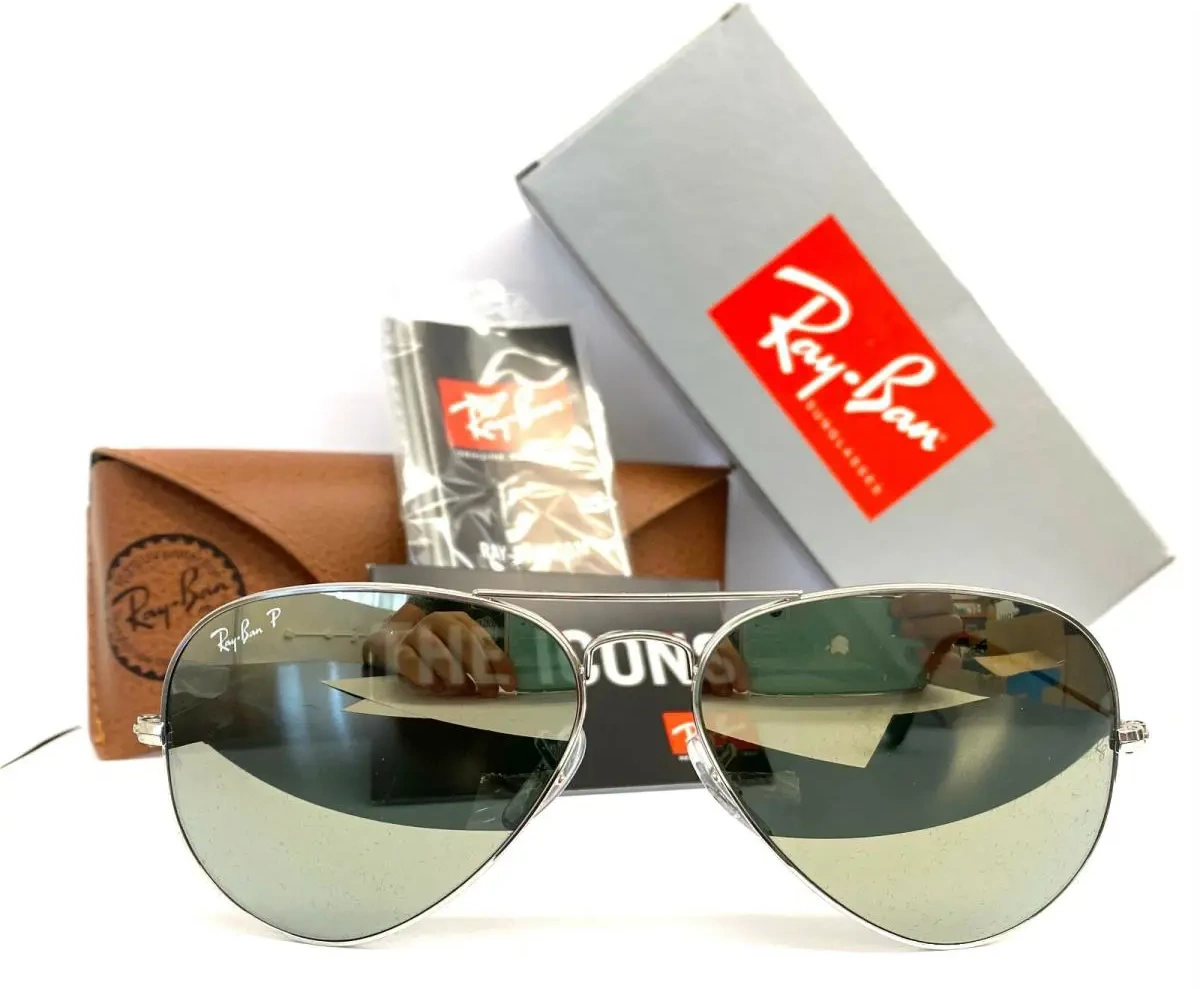
Ray-Ban Aviator RB3025 001/58: 58 mm or 62 mm?
Ray-Ban's RB3025 Aviator is a good place to start because it shows how much information can hide behind a familiar model name.
Two versions are:
At first glance, there is very little to separate them. Both use the classic gold-tone Aviator frame and polarized G-15 green lenses. Even the 001/58 color and lens code is identical.
The important part comes at the end.
The smaller version has a 58 mm lens width, 14 mm bridge and 135 mm temple length, with a lens height of about 50.1 mm.
The larger version moves to 62 mm lenses, keeps the same 14 mm bridge, extends the temples to 140 mm, and increases the lens height to approximately 54.2 mm.
Four millimeters does not sound dramatic until it is spread across both lenses. Add the greater lens height and longer temples, and the 62 mm Aviator occupies considerably more of the face.
For someone who already wears medium-size sunglasses comfortably, the 58 mm version is usually the safer starting point. The 62 mm frame makes more sense on a broader face, or for someone who deliberately wants the large, sweeping Aviator look.
There is no useful reason to pretend one is significantly lighter without an actual weight figure. What can be said with confidence is that the 58 mm frame is physically smaller and less expansive, while the 62 mm version offers more coverage.
This is exactly the sort of difference a product photograph can hide.
Ray-Ban New Wayfarer RB2132: same size, very different appearance
Compare that with the Ray-Ban RB2132 New Wayfarer.
Two references found in this family are:
Here, the 55 mm size stays the same.
Both use the familiar New Wayfarer proportions of roughly 55-18-145, with a lens height around 40.8 mm. The difference is largely cosmetic and optical rather than dimensional.
The 901L is the classic combination: black frame and green lenses.
The 622/30 uses a matte black frame with silver mirrored lenses.
Place them side by side and they can look like quite different sunglasses, especially in bright product photography. Put them on the same person, though, and the overall fit should be effectively unchanged.
This is an important distinction when decoding eyewear references. A different suffix does not automatically mean a different shape or size.
If you already know that the 55 mm New Wayfarer fits you, choosing between these two versions is much more about finish and lens appearance than fit.
There is also a smaller 52 mm New Wayfarer in the wider RB2132 range, which is why checking the actual size remains worthwhile even when the model number looks familiar.
Versace VE4405 108/73 and GB1/87: color changes, proportions do not
The Versace VE4405 is another frame where two color versions can look more different online than they really are.
The VE4405 108/73
The VE4405 GB1/87 pairs a black frame with dark gray lenses.
Both are approximately 54-22-140, with a lens height close to 47.4 mm.
That 47 mm height is useful information because lens width by itself can be misleading. A 54 mm frame sounds relatively moderate, but the tall lens and broad 22 mm bridge give the VE4405 a generous front profile.
On the face, it reads larger than a shallow 54 mm rectangular frame.
The Havana version tends to look softer because the pattern breaks up the outline of the frame. Black makes exactly the same dimensions appear stronger and more defined. That visual difference can easily be mistaken for a size difference when comparing separate photographs.
In practical terms, fit and coverage are essentially the same. Choose between them for color rather than expecting one version to sit differently.
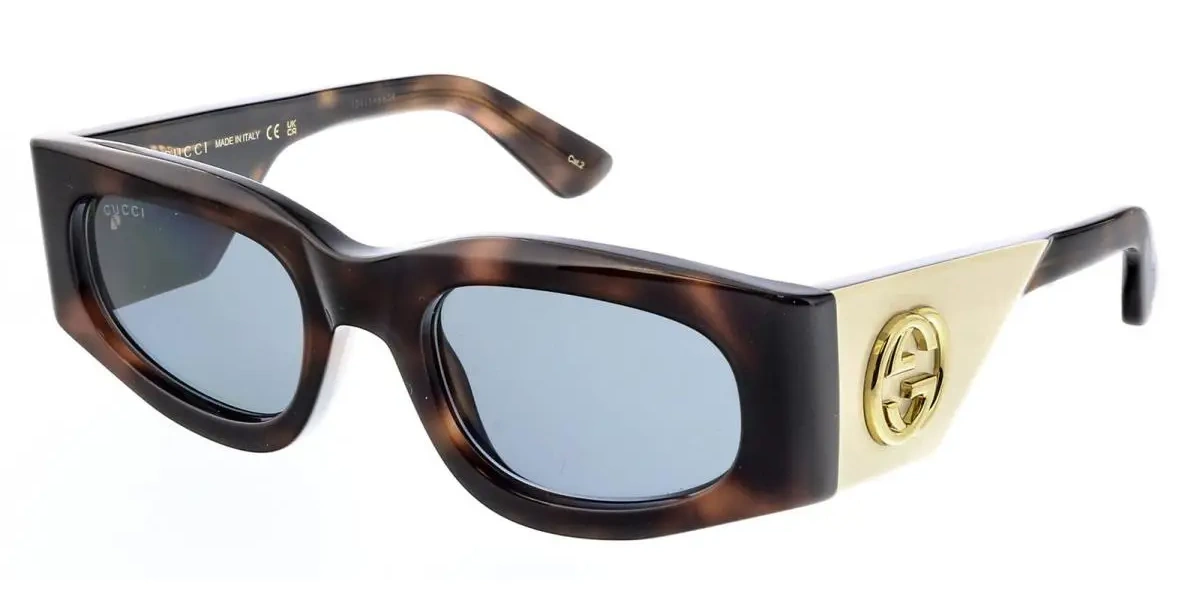
Gucci GG1664S: what do 002, 003 and 004 actually change?
Gucci references are a common source of confusion because the model number may stay fixed while the three-digit suffix changes.
Take the GG1664S.
Versions include:
The frame itself remains around 51-21-140, with a lens height of approximately 34 mm.
That shallow lens height is worth noticing.
Gucci makes plenty of large, deep fashion sunglasses, but the GG1664S is not one of the most oversized examples simply because it carries the Gucci name. Its 51 mm lens width and relatively low lens height give it a more compact profile.
The 21 mm bridge adds some width across the center, so it is not a tiny frame either. The result sits somewhere between narrow and oversized - a useful option for someone who wants a noticeable designer frame without covering a large part of the cheeks.
Between the 002, 003 and 004 references, the dimensions do not meaningfully change. What changes is the palette.
This is where searching by the complete reference helps. A retailer calling something simply "Gucci GG1664S Havana" may still leave you wondering whether you are looking at the green-lens or gray-lens version.
Gucci GG1346SK 001 and 003: same width, much deeper lens
The GG1346SK illustrates another issue: two frames can have similar lens widths and still look completely different in size.
Two versions are:
The published dimensions are approximately 56-19-145, with a lens height of around 50 mm.
Compare that 50 mm lens height with the GG1664S above, which is only around 34 mm high.
That is a 16 mm difference vertically.
So although the lens widths are separated by only a few millimeters, the GG1346SK covers substantially more of the face. It has a fuller, more oversized appearance and will generally make more sense for someone comfortable with medium-large frames.
This is also why "56 mm sunglasses" is not a very useful description by itself.
A 56 mm shallow rectangular lens and a 56 mm deep square lens can look nothing alike when worn.
Both GG1346SK color references share the same basic construction and proportions. There is no sensible basis for claiming one feels lighter than the other. The choice is black and gray versus Havana and green.
One further complication is gender labeling. Retailers do not always classify the same Gucci frame consistently. A model may appear under men's sunglasses on one site and unisex on another.
The measurements tell you far more about whether it will fit than the gender field does.
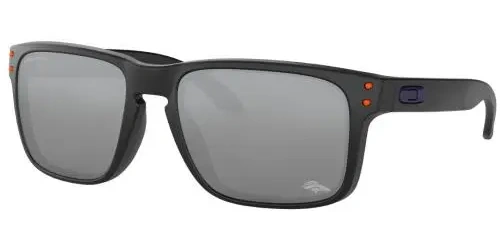
Oakley Holbrook OO9102: when the reference changes the lens technology
With Oakley, the characters after the model number can be more important than a simple color change.
Consider these two Holbrook OO9102 versions:
Both are built around the familiar Holbrook shape, approximately 55-18-137, with lens height around 43 mm.
They therefore occupy very similar space on the face.
The significant difference is in the lens specification.
The K655 uses a Prizm Violet lens. The V7 uses Prizm Black Polarized.
Polarization is not simply another lens color. It is designed to reduce reflected glare, which can be particularly noticeable around roads, water, glass and other reflective surfaces.
So a shopper comparing these two Holbrooks should not spend much time wondering whether one is larger. That is not where the meaningful difference lies.
The better question is whether polarization is useful for the way the sunglasses will be worn.
Someone mainly choosing by appearance may prefer the violet lens. Someone driving frequently or spending time around water may place more value on the polarized version.
This is a case where a small reference-code change affects function rather than fit.
Carrera 1067/S KJ1 WJ and J5G08: polarization hidden inside a similar frame
The Carrera 1067/S follows a similar pattern.
Two versions include:
Both are large pilot-style sunglasses with measurements around 62-14-145 and a lens height close to 52 mm.
Nothing about those dimensions is subtle.
A 62 mm lens combined with 145 mm temples gives this Carrera a genuinely large presence. It is much more likely to suit a medium-large or broad face than someone who usually buys narrow frames.
Both versions offer similarly generous coverage because the frame geometry stays the same.
The difference is again in the finish and lens.
The KJ1 WJ version adds polarization. The J5G08 does not. One has a dark ruthenium finish and gray lens, the other has the brighter look of gold metal with blue gradient lenses.
That is a real buying decision, not merely a color preference.
If glare reduction matters, the polarized reference deserves attention. If the appeal of the Carrera is mainly its large gold pilot styling, the J5G08 may be the more interesting version.
Either way, the 62 mm measurement should be noticed before purchase. This is not a standard-size pilot hiding behind an oversized photograph. It is actually large.
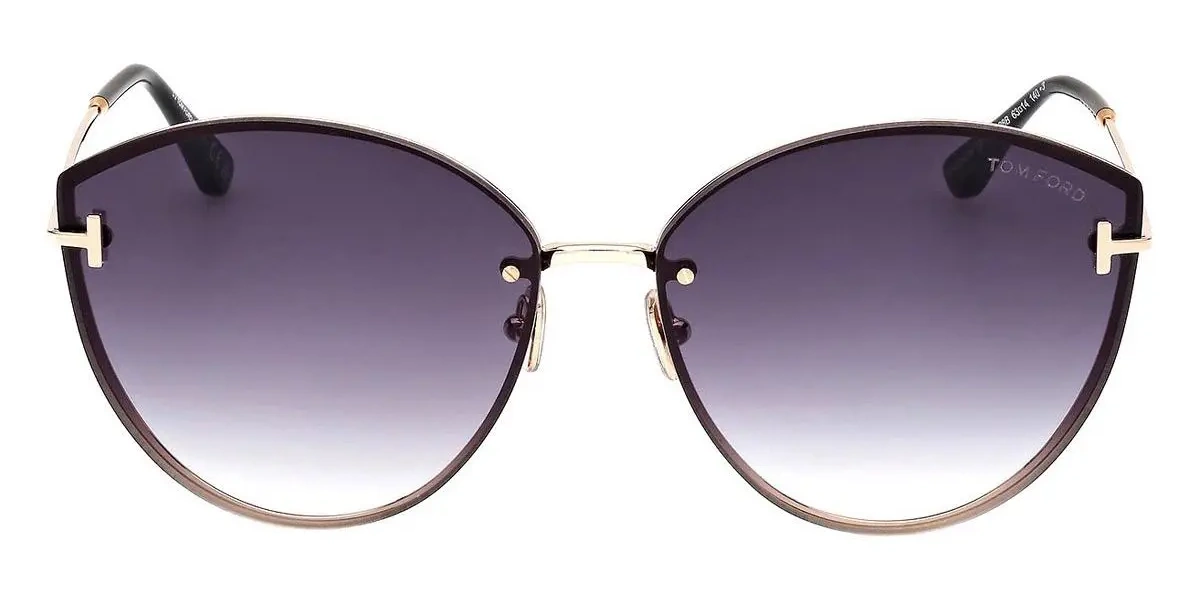
Tom Ford FT1106 Evangeline: three references, one oversized frame
The Tom Ford FT1106 Evangeline is a good final example because three versions can look dramatically different while sharing the same basic proportions.
They include:
All use a large 63-14-140 format, with lens height around 57 mm.
A 63 mm lens is large by almost any normal sunglasses measure, and the 57 mm height adds plenty of vertical coverage.
The interesting part is the construction. The Evangeline has a lighter-looking, more open metal/rimless presentation than a thick acetate frame of the same size. Visually, that can make it appear less bulky even though the actual lenses are very large.
The 16C feels cooler in appearance because of the palladium and smoke combination. The two 28 references use rose gold, but 28B pairs it with gradient smoke while 28G moves to a warmer brown mirrored lens.
Fit does not materially change between them.
If one FT1106 reference already suits you, there is little reason to expect another color version to suddenly fit differently. The choice comes down to lens finish and metal color.
The numbers worth checking before you order
When two designer sunglasses look similar, start with the information that is hardest for photographs to communicate.
Lens width tells you how wide each lens is, but do not use it alone.
Bridge width affects the spacing between the lenses and can influence both overall front width and how the frame sits around the nose.
Temple length becomes more relevant if you regularly find sunglass arms too short or too long.
Then look for lens height. It is often the missing measurement that explains why one 54 mm or 56 mm frame looks much larger than another.
After that, check the lens description carefully.
Green, gray and brown usually tell you about lens color. Terms such as polarized, gradient, mirrored and Prizm tell you something different about construction, treatment or performance.
Finally, compare the complete reference rather than stopping at the model family.
RB3025 does not tell you which Aviator size you are buying.
GG1664S does not tell you which color and lens combination you have found.
OO9102 tells you it is an Oakley Holbrook, but not whether the particular version uses a polarized lens.
The extra characters are not meaningless catalogue clutter. They are often the part of the reference that separates one version from another.
When two references really are almost the same
It is also worth knowing when not to overthink the code.
A black Versace VE4405 and a Havana VE4405 with identical measurements are not secretly different fits because the suffix changed. Two Gucci GG1664S color references with the same 51-21-140 specification will not suddenly suit completely different face sizes.
In those cases, buy the version you prefer visually.
The time to slow down is when the size changes, the lens technology changes, or the published measurements do not match.
That is especially important with older and discontinued designer eyewear, where several colors, production runs and sizes may still be circulating through different sellers.
A useful habit is to search the entire reference printed on the listing or inside the temple rather than only the brand and model name.
That one extra check can tell you whether you found the same sunglasses in another color - or a genuinely different version that only happens to look the same on screen.